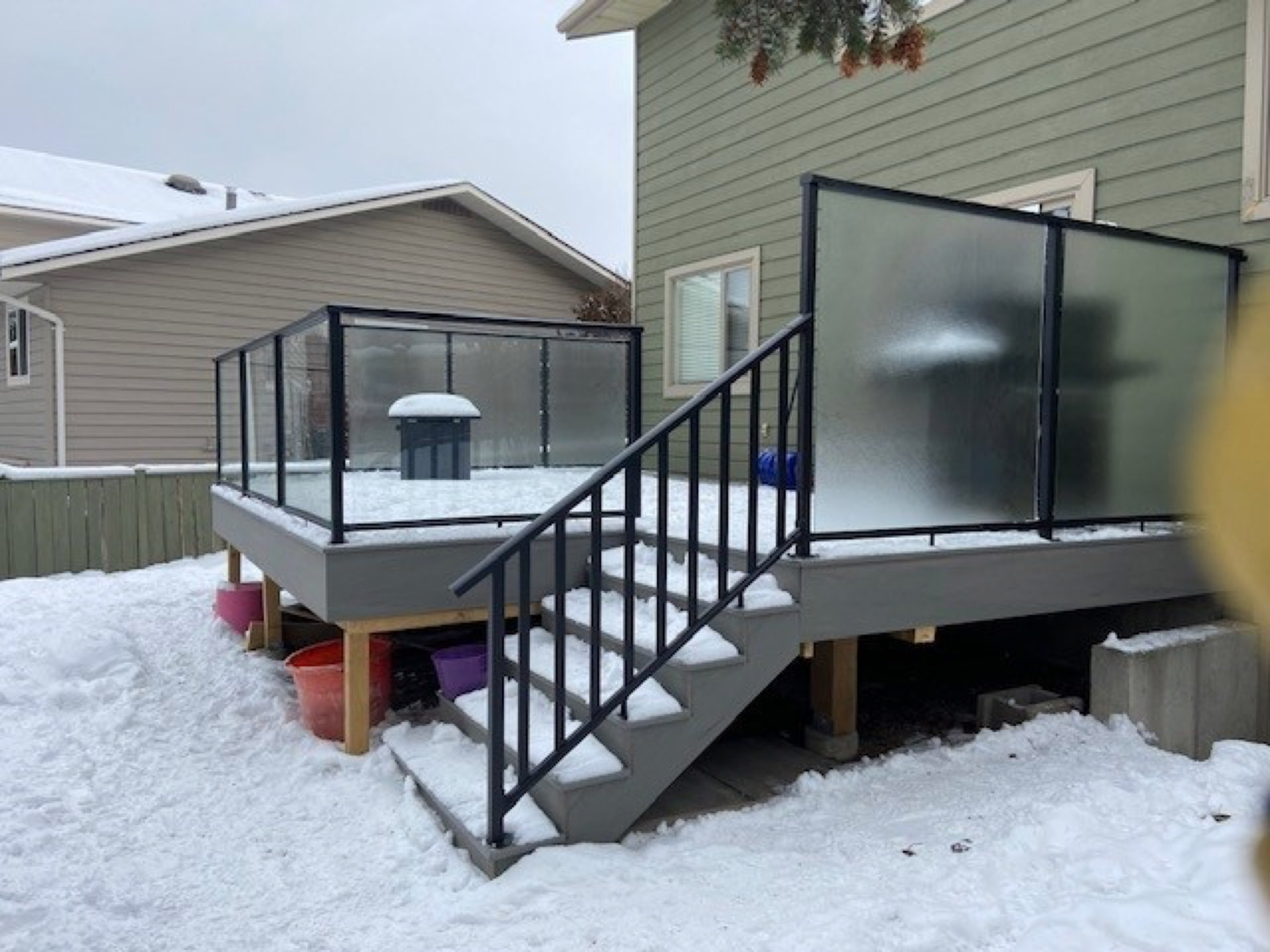
Vinyl and composite are both common low-maintenance choices for Kamloops decks, but the better option depends less on a generic material ranking and more on the deck itself. What sits below the deck, whether water needs to be kept away from that space, and how you plan to use your deck can all change the recommendation.
Before evaluating surface materials like vinyl or composite, Kamloops construction projects must first determine the structural waterproofing requirements of the underlying space.
That application-first approach is especially useful when you are comparing materials with a deck builder in Kamloops. A surface that makes sense over a garage or basement suite may not be the same choice you would make for a ground-level deck beside a pool. Start with the structure, then narrow down the finish.
Vinyl vs composite decking at a glance
Vinyl decking creates a continuous surface, while composite decking is installed as individual boards with spaces between them. That basic difference matters when water management below the deck is part of the project. To ensure the selected surface matches the underlying structural requirements, project teams should evaluate the range of Dekstar decking solutions before finalizing material procurement.
While both vinyl and composite eliminate the heavy maintenance cycles of traditional wood, final material selection must be driven by the structural and environmental demands of the specific installation.
Homeowners finalizing their material choices can review The Truth About Vinyl Decking: Pros, Cons, and Comparisons to evaluate long-term performance and maintenance requirements.
Start with what’s under your deck
The space below the deck is the most important starting point in this comparison. If there is a garage, basement suite, entrance, storage area, or another usable space underneath, keeping water from passing through the deck surface may be a central requirement. If the deck sits close to grade with nothing that needs to stay dry below, you have more flexibility.
This is why material selection should happen after the deck layout and underlying use are understood. Choosing by colour or appearance first can put the decision in the wrong order.
Deck over a garage, basement or other structure
Vinyl is typically the required surface material when a deck sits directly above enclosed living or utility spaces. Unlike composite decking, which allows moisture to drain through the board spacing, a proper vinyl installation acts as a continuous waterproof membrane to protect the underlying footprint.
Deck waterproofing directly protects the structural footprint below. Selecting an appropriate system requires assessing the existing framing and substrate first, particularly on renovation projects where hidden deterioration may be present.
Ground-level deck
When there is no enclosed or usable area below the deck, the waterproofing question may carry less weight. That opens the decision to other project priorities such as appearance, budget, preferred product, surrounding landscaping, and how the deck will be used.
Composite can be a strong option in these applications, while vinyl may still suit the homeowner’s preferences. There is no need to force one material into every ground-level project. Instead, the site and the homeowner’s priorities should lead the choice.
When evaluating materials suited to regional climate conditions, project teams can review what decking is popular in Kamloops to align surface choices with local performance standards.
What about pools and hot-tub decks?
For many ground-level pool and hot-tub deck applications, composite can be a practical material to consider because protecting an enclosed space below is usually not the same project requirement. The specific application drives material selection, as a pool or hot-tub location does not automatically make one material suitable for every property.
Think about the deck height, drainage around the area, traffic patterns, the surrounding landscape, and the finish you want. A project-specific review is more useful than choosing a surface because it is commonly associated with pools or outdoor entertaining.
Is vinyl or composite cooler in Kamloops summers?
Neither vinyl nor composite remains naturally cool under direct Kamloops sunlight. Because both surfaces absorb significant heat, project planning must incorporate color selection and structural shading directly into the final material decision.
A lighter colour may be worth considering when heat is a concern. Shade can also change how the deck feels during the hottest part of the day. To manage surface heat and extend usability, homeowners should evaluate patio covers suited for the BC Interior as part of the overall structural plan.
Material selection should never rely on blanket claims about surface temperatures. Project teams must instead evaluate specific color choices, sun exposure, structural shading, and intended site usage.
What if you’re replacing an existing deck surface?
Replacing an existing surface adds another layer to the material decision. Before switching from wood to vinyl or composite, or changing from one modern surface to another, the underlying deck should be assessed. The condition of the framing and substrate, what sits below the deck, and any waterproofing requirement can all affect what makes sense next.
Because hidden deterioration can fundamentally alter a renovation’s scope, project teams must identify and address underlying decking rot before installing any new surface materials.
A surface replacement should not assume that everything underneath can stay. If repairs are needed, identifying them before the finish is selected gives the project a clearer scope.
Making this assessment early also offers a practical sequencing benefit. If waterproofing below the deck is essential, that requirement can narrow the material conversation before time is spent comparing finishes that do not suit the application.
On a ground-level project, the homeowner can keep options open longer while weighing appearance, budget, colour, and how the space connects to the yard. That keeps the decision tied to the project rather than to a generic material preference.
Vinyl or composite: Which should you choose?
Use the deck application as the filter. Where a deck sits over a garage, basement, or another space that needs protection from water, vinyl is a strong starting point. For many ground-level decks, including pool and hot-tub areas, composite may be a practical option when waterproofing below is not the same concern.
For projects without that structural waterproofing requirement, either material may fit. Appearance, budget, colour, product preference, existing conditions, and the way you use the space can then carry more weight.
That is the value of discussing the project with a deck builder in Kamloops before choosing from a sample board alone. The right surface should work with the actual property, not just look good in isolation.
Talk to Dekstar about the right decking for your project
If you are deciding between vinyl and composite decking in Kamloops, Dekstar can review the deck structure, what sits below it, and how you want to use the finished space. From there, the team can help you compare suitable options without treating one material as the universal answer.
Contact Dekstar Exterior Solutions to discuss a project-specific decking recommendation for your home.